As we mentioned in the video, we’ve tried every kind of control surface on the market but nothing really suited us. So after many discussions, we started creating some initial designs to define what controls were to be featured on the unit. The idea was to find a design that worked intuitively, placing the controls in natural positions with comfortable spacing, looking for something that we could test and use in the studio for long periods.
At the same time we started to build the basic circuits, testing many different electronic components and ensuring the technology would work as expected. It was important to us to find quality components that felt good in use and were constructed to the highest possible standards.
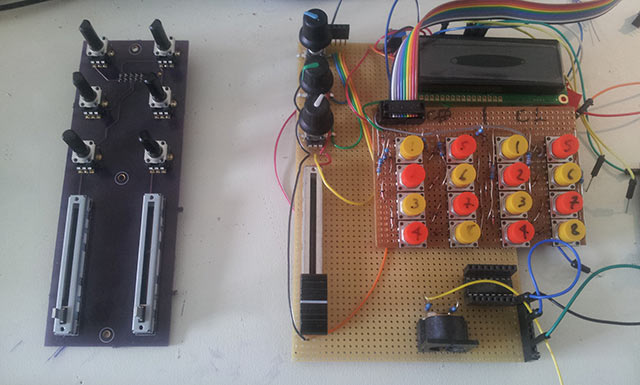
The First Working Prototype
We started to prototype our initial designs using Perspex and MDF. We named the project Dogma and set about trying many different control variations. For the ones that we thought may work, we set about constructing fully functional prototypes, built completely by hand.
You can see in these early pictures that the arrangement of the controls still hadn’t been finalized. This version didn’t feel right so we continued to refine the design.
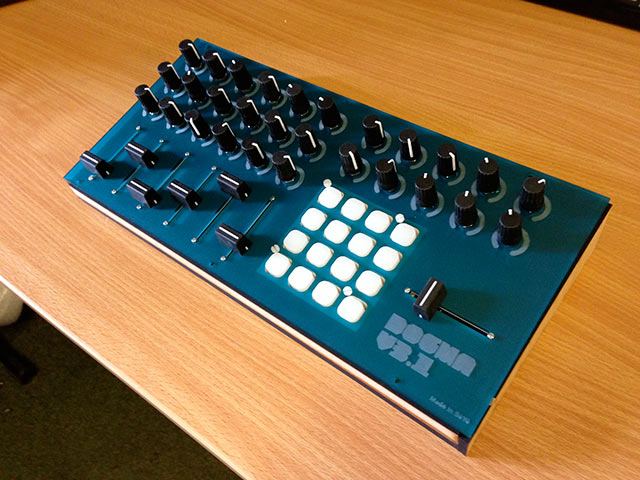
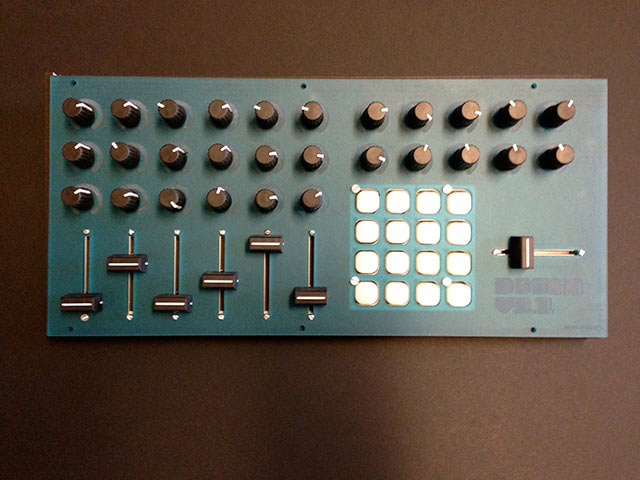
After 4 weeks of testing different control configurations, we finally settled on a control array and built our main PCB (printed circuit board).
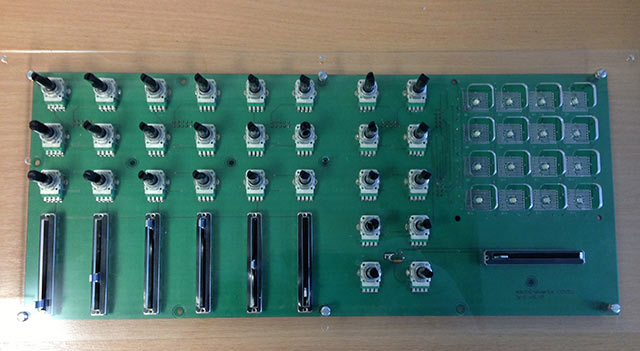
The First Aluminium Prototype
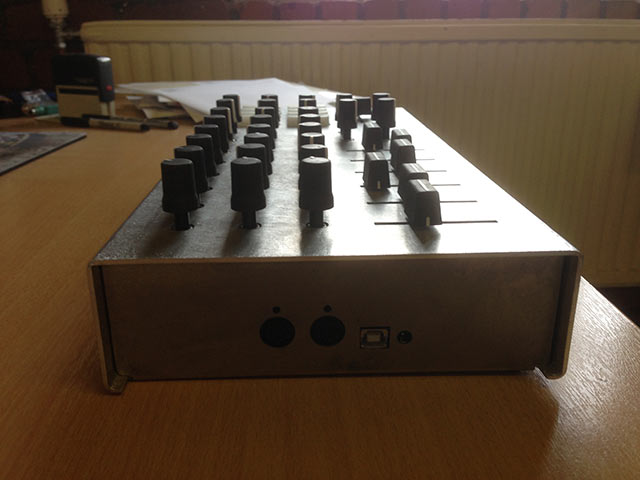
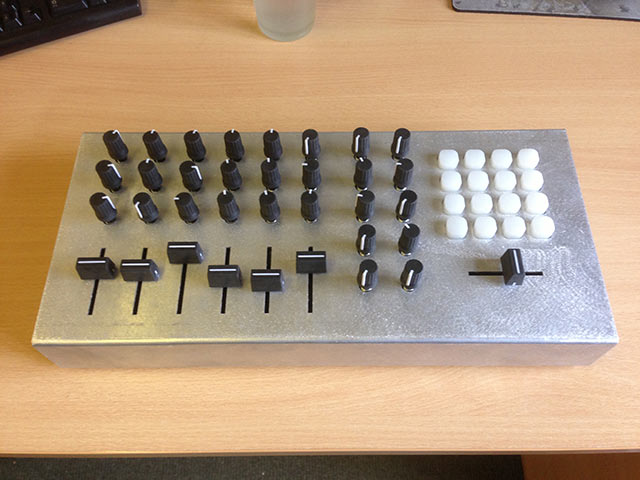
Once we were happy with the control layout and had a working PCB, we decide to make a case from Aluminum so we could take the unit on road. MDF and Perspex just wouldn’t hold up the stresses of life on the road. What we built next was a “tank” of a case! It certainly wouldn’t win any design awards but it did the trick and allowed us the fully test the layout and the PCBs in the environment the machine was designed for.
Redesigning the Aluminum Case
With everything fully tested and working it was time to hit the CAD and redesign the “tank” box into something beautiful. We wanted to create something we’d be really proud of and would want to own ourselves.
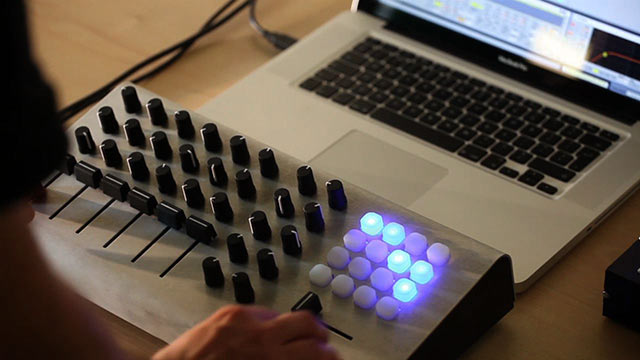
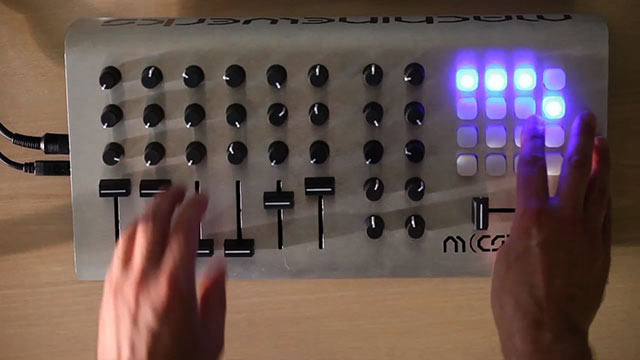
We now had the control surface we wanted. It was brilliant to use, looked great and we felt really proud of it. But as travelling artists we are always focused on how little todays airlines allow you to take onboard as hand luggage.
Further Development
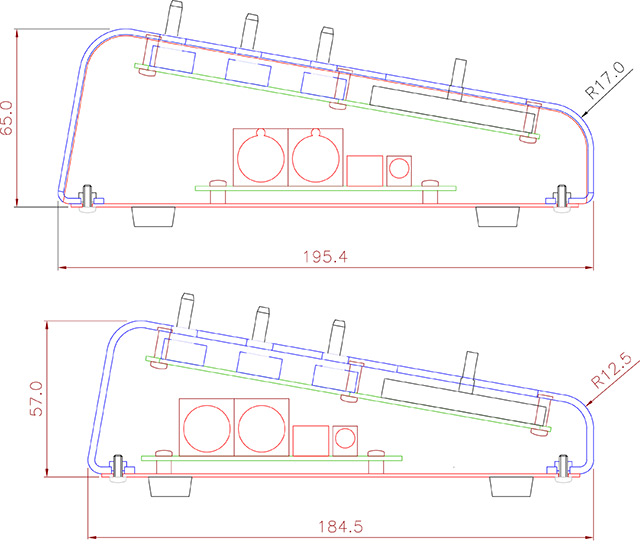
The next version of the CS X51 will be smaller than the current one being used and displayed. The CAD drawings show how the profile has been reduced. The current version is at the top and the next version is on the bottom.
Going Forward
There are still improvements and refinements required to turn this prototype into the final CS X51 ready for production, so that’s why we wanted your help on KickStarter.

